 Digest
Diwali in Vedic Astrology: Why the New Moon Matters

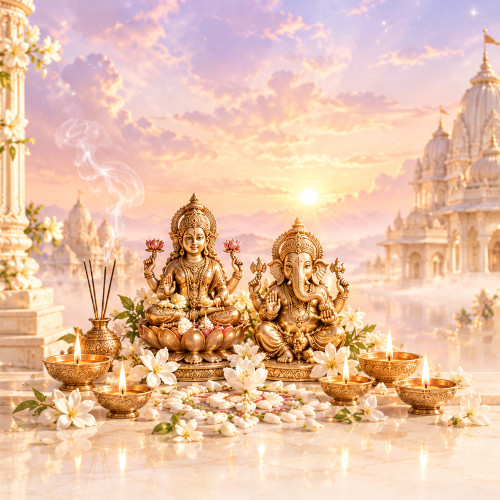
Diwali is the festival of lights, yet it is celebrated on the darkest night of the lunar month. That is not a coincidence. In Vedic astrology (Jyotish), the new moon night, called Amavasya, is the moment when the Sun and the Moon meet in the sky, and Diwali is tied to it by tradition. In 2026 the main Diwali night falls on Sunday, 8 November, on Kartik Amavasya. Exact timings depend on your location, so always check a local panchang.
This guide explains what Amavasya means in Jyotish, why lighting lamps on the darkest night makes sense symbolically, and how you can look at this new moon in your own birth chart.

Amber subscription
- Chart management
- Chart reports and interpretations
- Horoscope matching
- Vargas up to D-60
- Varshaphal, Prasna, Muhurta
- Bhava Chalit and Jaimini Chakras
- 4 Dasas with up to Pratyantardasa
- Basic Gochara and Panchanga search

Emerald subscription
Everything in Amber +
- Transsaturns, Upagrahas
- Vargas up to D-150 and all Chakras
- Mathematical rectification technics
- All Dasas with up to Sookshmadasa
- Detailed Ashtakavarga calculation, Shadbala
- Full-featured Gochara, Muhurta, Panchanga search
- All settings available in JMC Calculator

Ruby subscription
Everything in Emerald +
- 180 tokens included
- Deep dive analysis with AI assistant
- Jyotish Diary included
- Increased bonus for each affiliate in our affiliate program
- Research feature JMC Databank
- Unlimited chart quota
- Auto calculations for muhurta and rectification
What is Amavasya in Jyotish?
Vedic astrology divides the lunar month into 30 tithis, or lunar days. A tithi is not a calendar day. It is a stretch of time during which the Moon moves 12 degrees away from the Sun. When the Moon is at 0 degrees from the Sun, the two are conjunct, the Moon is invisible, and the tithi is Amavasya, the new moon. When they are 180 degrees apart, it is Purnima, the full moon.
This matters because the Moon is the most important planet in Jyotish for describing the mind, emotions and daily experience. On Amavasya the Moon's light is "absorbed" by the Sun, so many traditions treat it as a day for rest, reflection, remembering ancestors and starting fresh with a clear intention.
Why the darkest night?
Diwali, or Deepavali, means "a row of lamps". The idea behind it is simple and powerful: you do not wait for the sky to get brighter, you bring the light yourself. Families clean their homes, light diyas and welcome Lakshmi, the goddess associated with prosperity and well-being. On a night with no moonlight, every small flame is visible.
Astrologically, the dark moon is a blank page. Nothing is on display, so the focus moves inward. Many people use this night to set intentions for the coming year rather than to chase quick results.
The Sun in Libra: the sign of balance
Around Diwali the Sun is usually in Libra (Tula) in the sidereal zodiac that Jyotish uses, and the new moon happens in the same sign. Libra is ruled by Venus, the planet of harmony, relationships, comfort and trade. Many astrologers link this with the festival's themes of home, business accounts, gifts and family gatherings. In North India, the new financial year for traders has traditionally begun around this time.
This is a symbolic reading rather than a prediction. It simply shows why the mood of the festival and the sky fit so well together.
Pradosh Kaal and the timing of Lakshmi Puja
Lakshmi Puja is usually performed in the evening, in the window after sunset called Pradosh Kaal, while the Amavasya tithi is still in effect. Some traditions also prefer a sthira (fixed) rising sign, such as Taurus, for the ceremony because "fixed" suggests stability. Regional customs differ, and panchangs for different cities show different times.
Because sunset and tithi timings change from place to place, the safest way to find your time is to look up the panchang for your own city. On J108 you can read about the Panchanga tool in the JMC Calendar and use it to see the tithi, nakshatra and other daily elements for your location.
How to look at the new moon in your own chart
A new moon falls in a different part of every person's birth chart. That is what makes it personal.
- Calculate your chart in the J108 calculator. If you are new to Jyotish, the "I am new to Jyotish" option gives simpler explanations.
- Note your Moon sign (Rashi) and your rising sign (Lagna).
- Overlay the current planets on your chart with Gochara, the transit view. You will see which house the new moon occupies for you.
- Read that house as an area of life to rest and reset in, not as a verdict.
If you prefer a conversation to a chart, ask SIVA, the AI assistant inside J108. SIVA explains your horoscope in simple language and answers follow-up questions. You can try questions like these at j108.net/chat:
- "What does the Diwali new moon mean for my Moon sign?"
- "Which house of my chart does the new moon fall in?"
- "What are the main themes of my current planetary period?"
Simple ways to use the night
- Clean and clear. Tidy one space at home or one list on your desk.
- Light a lamp with an intention. Choose one thing you want to bring more light to over the next year.
- Write it down. A short note is easier to return to than a vague wish.
- Keep it kind. Festival astrology is about gratitude and renewal, not fear.
FAQ
When is Diwali in 2026? The main Diwali night, with Lakshmi Puja, falls on Sunday, 8 November 2026. Confirm the exact puja time with a panchang for your city.
Why does Diwali change its date every year? Diwali follows the lunar calendar, so it lands on the new moon of the month of Kartik. That puts it between mid-October and mid-November on the Gregorian calendar.
Is the new moon always auspicious? Traditions differ. Amavasya is seen as quiet and inward in general, and Diwali gives it a festive meaning. Many astrologers recommend using it for reflection rather than for big launches.
Can astrology predict what Diwali will bring me? Jyotish describes tendencies and timing, not guaranteed outcomes. Use your chart as a guide for reflection and planning.
Start with your own chart
See where this Diwali new moon falls for you. Try the free demo, build your chart, and ask SIVA to explain it step by step. To see everything the program offers, visit the features page.
Applies only for those who have a subscription expiring in the next six months or who does not have one.

Amber subscription
- Chart management
- Chart reports and interpretations
- Horoscope matching
- Vargas up to D-60
- Varshaphal, Prasna, Muhurta
- Bhava Chalit and Jaimini Chakras
- 4 Dasas with up to Pratyantardasa
- Basic Gochara and Panchanga search
Emerald subscription
Everything in Amber +
- Transsaturns, Upagrahas
- Vargas up to D-150 and all Chakras
- Mathematical rectification technics
- All Dasas with up to Sookshmadasa
- Detailed Ashtakavarga calculation, Shadbala
- Full-featured Gochara, Muhurta, Panchanga search
- All settings available in JMC Calculator
Ruby subscription
Everything in Emerald +
- 180 tokens included
- Deep dive analysis with AI assistant
- Jyotish Diary included
- Increased bonus for each affiliate in our affiliate program
- Research feature JMC Databank
- Unlimited chart quota
- Auto calculations for muhurta and rectification
First time on this website? 👉 Get to know more about us! 👈


Comments (0)