Read soon
-
Ежеквартальный дайджест #4/2026-2

Sidereal vs Tropical Zodiac Explained Simply
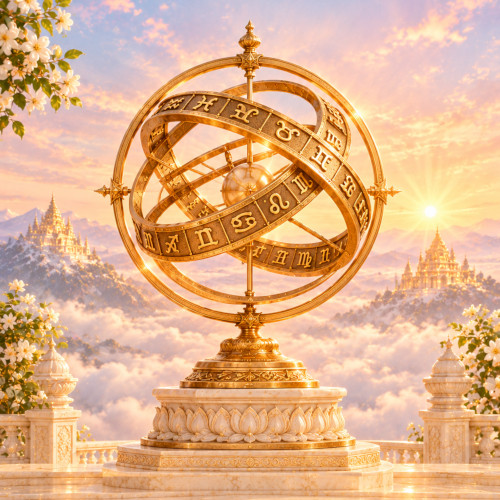
Open a Western horoscope and a Vedic one side by side and the planets often appear in different signs. The reason is not a calculation error. It comes down to two ways of drawing the same twelve-part zodiac: the tropical zodiac and the sidereal zodiac. Once you understand the difference, a lot of confusion about "my real sign" disappears. This article explains it step by step, without jargon.
Vedic vs Western Astrology: Why Your Sign May Be Different

If you have ever read a Vedic horoscope after a lifetime of Western ones, you may have had a small shock: the Sun sign you have always identified with is not the one in your Jyotish chart. You are not imagining it, and nobody made a mistake. Vedic and Western astrology share ancient roots, but they have developed different ways of measuring the sky and different ideas about what matters most in a chart. This guide explains the main differences in plain language, so you can read both traditions with confidence.
What Is Vedic Astrology? A Beginner's Guide to Jyotish

Vedic astrology, known in India as Jyotish, is a system of reading the sky that began in the Vedic tradition and is still widely used today. The Sanskrit word jyotish comes from jyoti, "light", and is often translated as the "science of light". Instead of focusing on a single Sun sign, Jyotish looks at the whole picture of your birth chart: the Moon, the rising sign, the planets, the houses, 27 lunar mansions called nakshatras and a built-in system of timing.
If you have only ever read your Sun sign horoscope, this guide will show you what is different and how to start.
Have you ever wondered why Mercury gets Diblaba in the 1st house?

Mercury is an adaptive Graha, he is an eternal child and student, and Lagna represent a person himself, they way the person thinks and behaves, and how his or her brain works.
In the natural zodiac, Mercury rules the 3rd (Gemini) and 6th (Virgo) house, forming a natural Dhimanta Yoga (combination of having knowledge).
But learning is not only about the possession of knowledge and information. This is the ability to adapt to surrounding circumstances, this is flexibility and quickness of thinking.
Together with the Digbala of Jupiter (truth, eternal knowledge, principles and ideals) in the first house, this allows one to intelligently adapt without betraying oneself and thereby maintaining one's own strength.
In addition, Digbala is associated with Muladhara (root) Chakra, which tells us that this is an important quality for survival, as well as the ability to distinguish: what is really good for one and what is bad.
Why Jupiter rules 9th and 12th house of the natural zodiac?

Jupiter in the natural zodiac rules the 9th and 12th house.
The natural zodiac is known as Kalapurusha in Sanskrit — personified time, the manifest part of God, His form, which is available to our perception and comprehension.
Everyone knows that man is created in the likeness of God. Accordingly, just as each house from Lagna in an individual horoscope shows a certain part of the body (head, mouth and neck, arms and shoulders, chest, etc.), so each sign indicates the corresponding part of the body of God.
12th house in the horoscope is responsible for freedom or its deprivation

Each of the twelve zodiacal signs is generated by one of the Adityas, where the last of the signs, Pisces, corresponds to the Aditya of Vishnu. Since the Lord is unlimited and in essence is the entirety of the world, beyond the limits of understanding and perception by our senses. He will be at the highest point of manifestation of Moksha-Trikona and will either grant freedom or deprive it.
If the Lagna lord is located in the 12th house, personal freedom will be very important for a person and he will strive to go beyond the limits of the familiar world. In the best sense of it, such a position can make a person spiritual and give an inclanation for meditation. In the worst case — to make a person run away through life, for example, from problems, from responsibility, etc.

 Digest


